15 Novembre 2026 | Letteratura, Recensioni
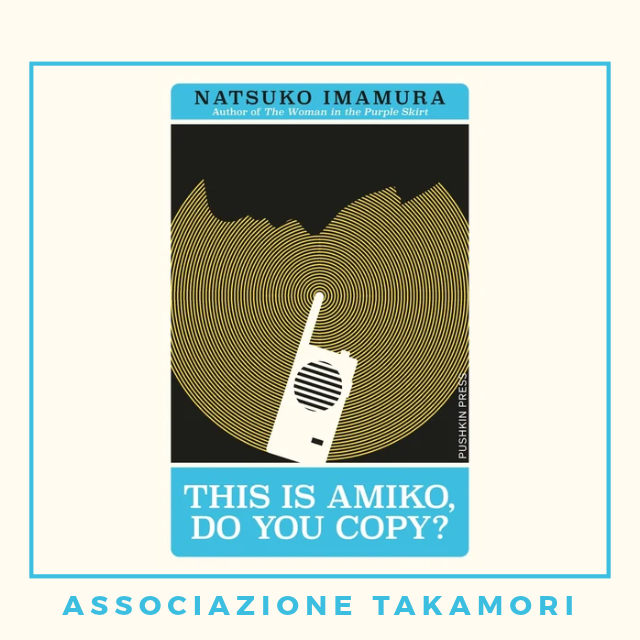
Author: Imamura Natsuko
Translation: Yoshio Hitomi
Publisher: Pushkin Press
Edition: 2023
Before The Woman in the Purple Skirt (La donna dalla gonna viola) brought Imamura Natsuko to the attention of Italian and international readers, the Japanese author had already made her literary debut with This is Amiko, Do You Copy? (こちらあみ子, Kochira Amiko). First published in 2011 and translated into English in 2023 by Yoshio Hitomi, the story follows a young girl who sees the world rather differently from those around her. It is a remarkable debut, and one that deserves more attention.
Amiko is an eccentric and inquisitive young girl whose increasingly troubled family life and difficulty connecting with others invite considerable sympathy. Her tendency to speak her mind and act on impulse frequently leads to misunderstandings, although she herself is often unaware that anything is amiss. Imamura never explicitly attributes Amiko’s behaviour to a particular condition or diagnosis, leaving readers to draw their own conclusions about her difficulties understanding social conventions.
Throughout the story, Amiko is subjected to repeated humiliation and rejection, both at home and at school. Her classmates ridicule her appearance and behaviour, while a boy for whom she has developed feelings punches her in the face, knocking out her front teeth. At home, following her mother’s miscarriage, Amiko attempts to comfort her by constructing a small grave marker for the unborn child, just as she had seen done for deceased animals. Her mother reacts with horror to the gesture and withdraws even further from the family, leaving Amiko bewildered by a reaction she had never anticipated.
Amiko’s apparent inability to recognise the cruelty she faces daily does not, however, mean that she is incapable of suffering. The mysterious presence she believes inhabits the family balcony becomes a source of considerable anxiety, its unsettling sounds rattling around in her head as her family grows increasingly distant. What she interprets as a ghost eventually turns out to be something entirely ordinary, and her initial fear gives way to a moment of wonder before it, too, is snatched from her.
At times, This is Amiko, Do You Copy? Is heartbreaking, not least because so much of the suffering Amiko endures might have been avoided had those around her shown a little more patience and taken the time to explain things she struggles to understand. The adults in her life frequently respond with frustration or indifference, leaving her to make sense of a world whose rules everyone else seems to understand. Through her perspective, Imamura gives a voice to children whose experiences and ways of thinking are too often dismissed or even misunderstood. Amiko, meanwhile, continues calling out through her walkie-talkie, hoping that someone might finally answer.
Review by Connal Shaw
Autore: Imamura Natsuko
Traduzione: Yoshio Hitomi
Editore: Pushkin Press
Edizione: 2023
Prima che La donna dalla gonna viola la facesse conoscere al pubblico italiano, Imamura Natsuko aveva già esordito nel panorama letterario giapponese con This is Amiko, Do You Copy? (こちらあみ子, Kochira Amiko). Pubblicato per la prima volta nel 2011 e tradotto in inglese da Yoshio Hitomi nel 2023, il romanzo breve racconta la storia di una bambina che vede il mondo in modo molto diverso dalle persone che la circondano.
Amiko è una bambina eccentrica e curiosa, per la quale è difficile non provare simpatia, soprattutto di fronte ai problemi familiari e alle difficoltà nei rapporti con gli altri. Dice sempre quello che pensa e agisce spesso d’impulso, finendo per suscitare incomprensioni di cui il più delle volte non si rende nemmeno conto. Imamura non riconduce mai esplicitamente il suo comportamento a una particolare condizione o diagnosi: spetta al lettore interpretare le sue difficoltà nel comprendere le convenzioni sociali.
Nel corso della storia, Amiko subisce continue umiliazioni e rifiuti, tanto in famiglia quanto a scuola. I compagni la deridono per il suo aspetto e per i suoi modi di fare, mentre un ragazzo per il quale prova dei sentimenti arriva a sferrarle un pugno in faccia. Anche in famiglia, le sue buone intenzioni vengono fraintese. Dopo la perdita della gravidanza, la madre di Amiko si chiude sempre più in sé stessa, sopraffatta dal dolore. Nel tentativo di consolarla, Amiko costruisce una piccola lapide, come aveva visto fare per gli animali morti. Il gesto però sconvolge profondamente la donna, che si allontana ancora di più dalla famiglia.
Il fatto che Amiko sembri non accorgersi della crudeltà che subisce quotidianamente non significa, tuttavia, che sia incapace di soffrire. La misteriosa presenza che crede si nasconda sul balcone di casa diventa per lei motivo di grande angoscia. I rumori inquietanti che sente continuano a risuonarle nella testa, mentre i suoi familiari si allontanano sempre di più. Quello che inizialmente scambia per un fantasma si rivela infine qualcosa di assolutamente ordinario. Alla paura subentra allora un breve momento di meraviglia, destinato però a esserle sottratto quasi subito.
This is Amiko, Do You Copy? è a tratti una lettura straziante, soprattutto perché molte delle sofferenze della protagonista si sarebbero potute evitare con un po’ più di pazienza e qualche spiegazione da parte di chi le sta accanto. Gli adulti che la circondano reagiscono spesso con insofferenza o indifferenza, lasciandola sola ad affrontare un periodo critico della sua infanzia. Attraverso lo sguardo di Amiko, Imamura dà voce a quei bambini le cui esperienze e il cui modo di pensare vengono troppo spesso ignorati. Una lettura breve ma intensa, che merita senz’altro di essere scoperta. Amiko, intanto, continua a chiamare a vuoto con il suo walkie-talkie, nella speranza che prima o poi qualcuno le risponda.
Recensione di Connal Shaw
21 Giugno 2026 | Letteratura, Recensioni

Author: Tawada Yōko
Translation: Margaret Mitsutani
Publisher: Granta Books
Edition: 2025
Suggested in the Stars (星に仄めかされて, Hoshi ni Honomekasarete), translated by Margaret Mitsutani, is the second volume in Tawada Yōko’s trilogy that began with Scattered All Over the Earth. Reuniting Hiruko and the companions she gathered during her search for fellow Japanese survivors, the novel follows the group’s efforts to help Susanoo recover his voice after finally locating him at the end of the previous book. Once more, Tawada uses this premise to explore questions of language and belonging in a world where Japan has faded from both maps and memory.
In the same style as the first entry in the trilogy, the narrative shifts between multiple perspectives and frequently moves through flashbacks, gradually revealing the cast’s backstories and motivations. The group converges on Copenhagen in the hope that treatment from a speech loss specialist will restore Susanoo’s voice and enable him to speak once more in his own language. The physician overseeing this case is Dr. Velmer, a cynical and often authoritarian figure who becomes convinced that the silence he is treating may not be a medical condition at all. Instead, he entertains the possibility that Susanoo has simply forgotten the language he once spoke, leading him to question both the value of restoring it and the assumptions of those determined to help. Much of this storyline unfolds within a decaying Copenhagen hospital whose atmosphere strongly recalls the unsettling world of Lars von Trier’s The Kingdom.
Language remains at the centre of the novel, though Tawada approaches the subject with even greater humour and absurdity than before. Susanoo’s condition becomes the starting point for questions about the value people attach to their mother tongue and whether shared language or nationality alone can create a meaningful sense of connection. In doing so, the novel complicates the beliefs that motivated Hiruko’s search in the first place, asking what it means to belong to a culture that has disappeared.
This concern with language is reflected in the novel’s increasingly dreamlike and surreal atmosphere. Reality shifts without warning and scenes often develop according to the logic of association rather than conventional causality. Characters frequently move from one situation to another through conversations alone, as though language itself could reshape the world around them. Margaret Mitsutani’s translation once again stands out in these passages, capturing the fluidity and absurdity of Tawada’s writing.
Suggested in the Stars expands the ideas introduced in Scattered All Over the Earth while moving further into the realm of dreams and linguistic play. Rather than providing clear answers to the mysteries and questions raised by its predecessor, Tawada frequently complicates them, introducing new questions and unexpected directions for both the characters and the reader. It feels very much like a bridge between the first and final volumes, leaving readers eager to discover where this unusual journey will ultimately lead, even if definitive answers seem to be beside the point.
Review by Connal Shaw
Autrice: Tawada Yōko
Traduzione: Margaret Mitsutani
Editore: Granta Books
Edizione: 2025
Suggested in the Stars (星に仄めかされて, Hoshi ni Honomekasarete), tradotto in inglese da Margaret Mitsutani, è il secondo volume della trilogia iniziata con Scattered All Over the Earth. Il romanzo ci riporta accanto a Hiruko e all’improbabile gruppo che si è formato attorno a lei. Dopo aver ritrovato Susanoo, un cuoco giapponese rimasto improvvisamente privo della parola, i protagonisti cercano di comprenderne la condizione e di aiutarlo a recuperare la voce. Ancora una volta, Tawada parte da questa premessa per esplorare il linguaggio e sull’appartenenza in un mondo in cui il Giappone è ormai scomparso dalle mappe e quasi del tutto dissolto nella memoria collettiva.
Come nel primo capitolo della trilogia, la narrazione si sposta continuamente tra diversi punti di vista e si apre spesso a ritorni nel passato, che ricostruiscono gradualmente le storie e le motivazioni dei personaggi. Il gruppo si reca a Copenaghen nella speranza che un medico possa restituire la voce a Susanoo. A occuparsi del caso è il dottor Velmer, figura cinica e autoritaria che finisce per mettere in dubbio la natura stessa della sua condizione. Secondo lui, il paziente potrebbe non soffrire di un disturbo medico, ma aver semplicemente dimenticato la propria lingua madre. Questa ipotesi lo porta a mettere in discussione il senso stesso del tentativo di “recuperarla”. Gran parte di questa vicenda si svolge all’interno di un ospedale decadente di Copenaghen, la cui atmosfera sembra uscita direttamente da Il Regno di Lars von Trier.
Il linguaggio resta il tema centrale del romanzo, ma questa volta Tawada lo affronta attraverso situazioni sempre più eccentriche e imprevedibili. La condizione di Susanoo diventa il punto di partenza per riflettere sul valore attribuito alla lingua madre e sulla possibilità che lingua e nazionalità condivise bastino a creare un legame tra due persone. Così il romanzo ripensa le premesse che avevano guidato la ricerca di Hiruko e si confronta con una cultura ormai svanita.
A dare forma a queste domande è una narrazione sempre più surreale. La realtà sembra mutare di continuo e le scene si sviluppano per associazioni, più che secondo una logica narrativa tradizionale. I passaggi da una situazione all’altra avvengono spesso attraverso le conversazioni, come se fossero le parole stesse a ridefinire il mondo del romanzo. Qui la traduzione di Margaret Mitsutani si conferma eccellente, come già nel primo volume.
Suggested in the Stars amplia i temi introdotti in Scattered All Over the Earth, spingendosi ancora più nel sogno e nella sperimentazione linguistica. Anziché offrire risposte a tutte le domande del primo volume, il romanzo le complica ulteriormente, aprendo nuove direzioni narrative e concettuali. Si configura così come un ponte tra l’inizio e la conclusione della trilogia, lasciando il lettore in attesa di uno sviluppo che, forse, non mira affatto a una risoluzione definitiva.
Recensione di Connal Shaw

Commenti recenti