
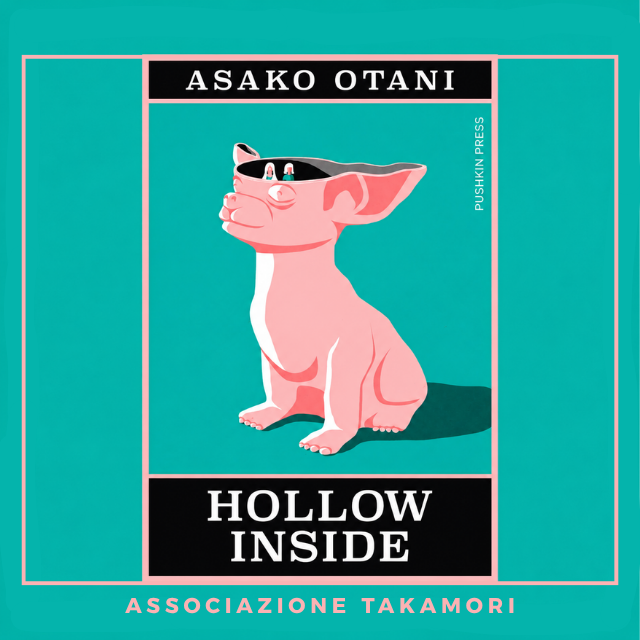
Author: Ōtani Asako
Translation: Ginny Tapley Takemori
Publisher: Pushkin Press
Edition: 2026
Ōtani Asako is a Japanese writer born in Chiba Prefecture in 1990. She made her literary debut with Hollow Inside (がらんどう) which won the prestigious 46th Subaru Literary Prize in 2022. The award-winning book was subsequently published by Shueisha in 2023, before reaching English-language readers in 2026 with Ginny Tapley Takemori’s translation, published by Pushkin Press.
Hirai, a 38-year-old office worker, and Suganuma, a few years her senior, unexpectedly find themselves sharing a home. The two women settle into an easy domestic rhythm, cooking for one another and quietly accommodating each other in their daily lives.
For all the comfort Hirai finds in this arrangement, it is not something she feels able to discuss openly. She avoids mentioning it to her colleagues and even her own mother, conscious of how difficult it is to explain a life that does not follow the conventional progression of dating, marriage and motherhood. However, that sense of security is disturbed when Suganuma, who has long maintained that she does not want to marry or risk having a child outside of wedlock, begins an affair with a married man after learning that her childhood idol has entered a “shotgun marriage”. As the affair leaves Suganuma frequently absent from home, Hirai finds the domestic life they have built becoming less certain. She turns once again to a dating app, hoping to find some direction, only to find herself no closer to resolving the uncertainty she feels.
Rather than presenting marriage or motherhood as inherently undesirable, Ōtani examines the assumptions surrounding them and how they shape both the everyday lives of her two protagonists and the way they see themselves. Both women have settled into lives that sit somewhat outside the roles prescribed to them by family and society, and while neither is presented as making a grand rejection of those expectations, Ōtani cleverly depicts the weight they carry. Hirai repeatedly reflects on her age, her changing body and the possibility that she is already “too old” to marry, even as she struggles to imagine wanting such a life in the first place. Her observations of Suganuma’s body, as well as of older women, similarly draw attention to the insecurities that women are taught to associate with ageing and appearance. Ōtani is also careful to resist giving their relationship an easy definition, capturing the fulfilment they find in living together without feeling the need to turn that closeness into a romantic partnership.
The novel gives these abstract pressures a concrete, physical form, and directly mirrors its title, Hollow Inside, through Suganuma’s unusual side business of 3D-printing replicas of deceased pets. While the statuettes capture every external detail to offer grieving owners something tangible, they remain completely hollow on the inside. Hirai comes to see herself in these figures, feeling detached from the life she once assumed she would have and sometimes imagines leaving her body behind to join the dead animals.
Despite its brevity, the novel moves at an immaculate pace, allowing room for psychological depth without a single wasted word. Rendered into English through Ginny Tapley Takemori’s crisp translation, Ōtani’s prose strikes a delicate balance between deadpan humour and tenderness. She crafts Hirai and Suganuma in such an intimate manner that their inner lives feel remarkably real in just a few pages. By leaning into subtle, everyday observations rather than melodramatic conflict, Ōtani presents a story that is as offbeat and funny as it is emotionally resonant.
By the closing lines of Hollow Inside, Hirai has begun to accept that her life does not need to resemble the one that has been imagined for her. What matters to her needs not fit the shape others expect, nor does it need to be understood by them. Ōtani leaves us with a deceptively simple question: Why must our self-worth hinge on a life plan laid out by others?
Review by Connal Shaw
Autore: Ōtani Asako
Traduzione: Ginny Tapley Takemori
Editore: Pushkin Press
Edizione: 2026
Ōtani Asako è una scrittrice giapponese nata nel 1990 nella prefettura di Chiba. Ha esordito con Hollow Inside (がらんどう), opera vincitrice del 46° Premio Subaru per la Letteratura nel 2022. Il libro è stato pubblicato in Giappone da Shueisha nel 2023 ed è arrivato al pubblico anglofono nel 2026 con la traduzione di Ginny Tapley Takemori per Pushkin Press.
Hirai, impiegata d’ufficio di 38 anni, e Suganuma, di qualche anno più grande, si ritrovano inaspettatamente a condividere la stessa casa. Tra le due si instaura presto una quotidianità semplice e armoniosa: cucinano l’una per l’altra e si adattano con naturalezza alle rispettive abitudini.
Per quanto Hirai trovi conforto in questa sistemazione, non riesce a parlarne apertamente. Evita di raccontarlo ai colleghi e persino alla madre, consapevole di quanto sia difficile spiegare una vita che non segue il percorso convenzionale fatto di relazioni, matrimonio e maternità. Questo equilibrio entra però in crisi quando Suganuma, che ha sempre sostenuto di non volersi sposare né di voler rischiare una gravidanza fuori dal matrimonio, inizia una relazione con un uomo sposato, dopo aver scoperto che il suo idolo d’infanzia ha avuto un matrimonio riparatore. Le frequenti assenze di Suganuma finiscono così per incrinare la sicurezza che Hirai aveva trovato nella loro convivenza. Ancora una volta, Hirai ricorre a un’app di incontri nella speranza di trovare una direzione, ma non riesce a fare chiarezza sul proprio disorientamento.
Più che presentare il matrimonio o la maternità come scelte intrinsecamente indesiderabili, Ōtani mette in discussione le aspettative sociali che li circondano e il modo in cui condizionano la vita quotidiana e l’autopercezione delle protagoniste. Entrambe hanno costruito un’esistenza che si discosta dai ruoli tradizionali prescritti dalla famiglia e dalla società; pur senza trasformare questa distanza in una presa di posizione esplicita, Ōtani riesce a mostrare tutto il peso di tali condizionamenti. Hirai riflette spesso sulla propria età, sui cambiamenti del corpo e sulla possibilità di essere ormai troppo vecchia per sposarsi, anche se fatica a capire se desideri davvero una vita simile. Al contempo, le osservazioni sul corpo di Suganuma e sulle donne più anziane richiamano le insicurezze che la società insegna ad associare all’invecchiamento e all’aspetto fisico. Ōtani evita inoltre di etichettare la relazione tra le due, mostrando la pienezza che trovano nel vivere insieme senza la necessità di trasformare la loro intimità in un rapporto sentimentale.
Il romanzo dà una forma concreta e tangibile a queste pressioni invisibili, richiamando direttamente il titolo, Hollow Inside (“vuoto dentro”) attraverso l’insolita attività secondaria di Suganuma, che realizza con una stampante 3D riproduzioni di animali domestici scomparsi. Se da un lato le statuette ne conservano ogni dettaglio esteriore per offrire un conforto ai padroni, al loro interno restano del tutto vuote. È proprio in queste figure che Hirai finisce per rispecchiarsi, sentendosi estraniata dalla vita che un tempo immaginava per sé, fino a fantasticare di abbandonare il proprio corpo per unirsi a quegli animali.
A dispetto della sua brevità, il romanzo procede con un ritmo dosato con estrema cura, capace di offrire una notevole profondità psicologica senza sprecare una singola parola. Nella lucida traduzione di Ginny Tapley Takemori, la prosa di Ōtani trova un delicato equilibrio tra un umorismo asciutto e una grande delicatezza. L’autrice tratteggia Hirai e Suganuma con una tale intimità che il loro mondo interiore risulta incredibilmente vivo in pochissime pagine. Privilegiando le piccole osservazioni quotidiane rispetto ai grandi drammi, Ōtani ci regala una storia stravagante e divertente, ma al tempo stesso carica di risonanza emotiva.
Nelle ultime pagine di Hollow Inside, Hirai comincia ad accettare che la propria vita non debba necessariamente ricalcare ciò che gli altri avevano immaginato per lei. Ciò che conta davvero non deve per forza conformarsi alle aspettative altrui, né ha bisogno della loro approvazione. Ōtani ci lascia così con un quesito fondamentale nella sua semplicità: perché la pienezza della nostra esistenza dovrebbe essere misurata sul modello che altri hanno disegnato per noi?
Recensione di Connal Shaw